Search "Plaza Midwood vs South End home prices" this week and you'll get four different answers from four sources that all claim to describe the same two neighborhoods in the same year. One portal has South End listed at a median of $625,000 this month. Another puts last month's median sale at $714,000. A third, published in the spring, pegged the typical home value closer to $525,000. A fourth, an April 2026 analysis of local listings, landed at $610,000. Four sources, four numbers, and a spread of nearly $190,000 between the highest and the lowest.
If you're cross-shopping these two neighborhoods before your first call with an agent, that spread should stop you. Not because someone is wrong. Because the disagreement itself is the story, and once you understand why it happens, you understand something about how value actually moves through Charlotte's inner ring that a single median never could have told you.
The Four Numbers That Don't Agree
Here's what a buyer researching both neighborhoods in 2026 actually finds when they check more than one source:
| Source | Time Window | South End Figure | Plaza Midwood Figure |
|---|---|---|---|
| Movoto | September 2026 | $625K median list ($404/sqft) | Not tracked separately |
| Redfin (South End) | Last month (August 2026) | $714K median sale ($437/sqft) | Not tracked separately |
| Opendoor market write-up | April 2026 | ~$525K median value | Not included |
| Local market analysis | April 2026 | ~$610K median list | ~$927,500 median list / ~$830K median sold |
That's a roughly $190,000 swing for the same neighborhood in the same calendar year, depending on which site you trust. Plaza Midwood tells a different story. Sources that track it independently land in a much tighter band. One early-2026 write-up put its median list between roughly $804,000 and $985,000. The April 2026 analysis above put it at $927,500. Different sources, same neighborhood, a band of less than $200,000 wide, and every single figure sits well above South End's headline number no matter which South End figure you pick.
The instinct is to assume South End is the affordable option and Plaza Midwood is the expensive one. Based on the actual 2026 data, that's backwards more often than it's right, and the reason has nothing to do with which website made an error.
Why the Numbers Bounce: Thin Markets and Mixed Inventory
South End moves fast, but it doesn't move in volume. A separate Redfin neighborhood page (one that draws South End's boundary slightly differently than the main page above) recorded just six home sales in October 2025, up from two the year before. That's the kind of sample size where a monthly median is built from a handful of closings, and whatever happens to close that month, three new-construction townhomes at $900,000 or two entry-level condos at $350,000, swings the whole number. That's not measurement error. That's what a thin, heterogeneous market looks like when you force it into a single figure, and there's no reason to think the sales volume has changed enough since then to fix it.
Plaza Midwood's number holds steadier because its inventory doesn't change character month to month. A hundred-year-old Craftsman bungalow on Central Avenue and a Tudor Revival two blocks off The Plaza are more alike than a South End condo and a South End new-construction townhome will ever be. When the underlying housing stock is consistent, the median is a more honest snapshot of what's actually for sale. When it isn't, the median is really just describing whoever happened to close that month.
Why the Old Neighborhood's Price Barely Moves
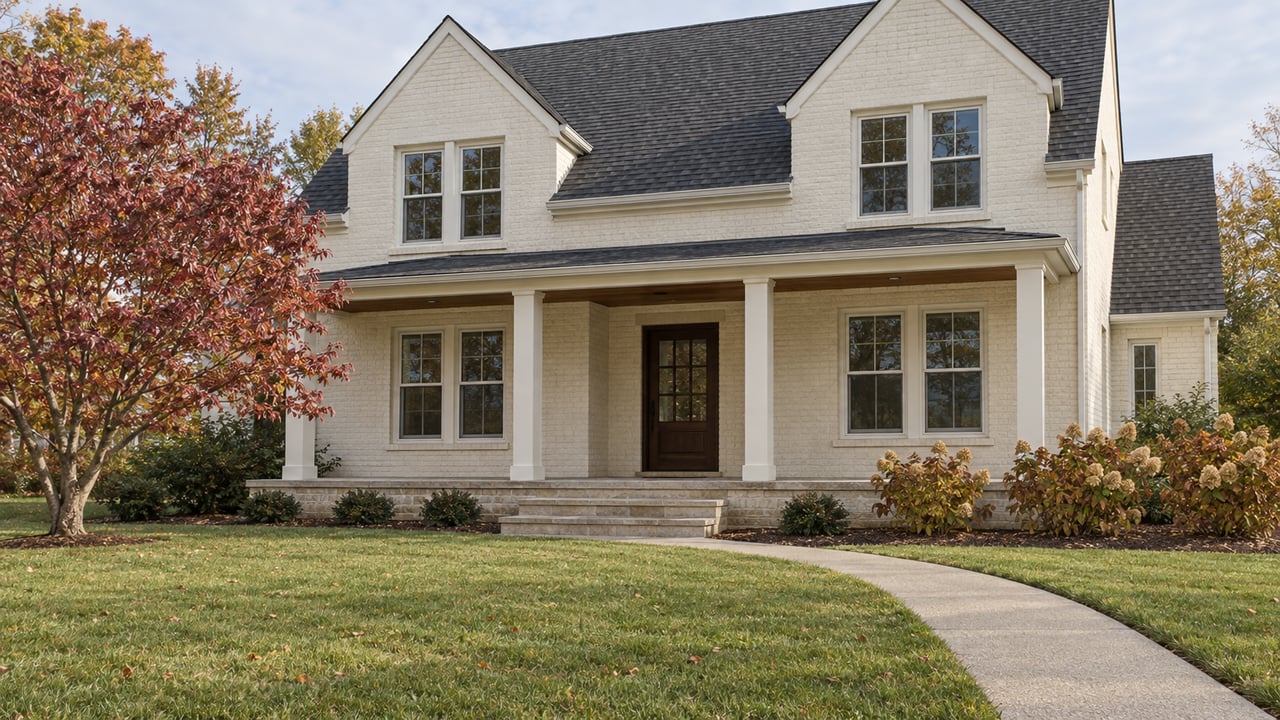
Plaza Midwood's price floor comes from something South End can't replicate: it can't build more of its own history. The housing stock along Thomas Avenue and The Plaza includes Craftsman bungalows and 1920s-to-1940s Tudor and Spanish Revival homes. Scarcity that's protected by policy behaves differently than scarcity that's just temporary.
The trade-off is block by block. Property a few doors from Central Avenue's restaurant and bar strip lives a different daily reality than property three blocks over. Buyers comparing listing photos alone miss that distinction entirely, and it matters more in Plaza Midwood than almost anywhere else in the metro because the neighborhood grew organically over a century rather than around a single master plan.
What South End Is Actually Selling
South End's case is built on a different asset: direct access to the LYNX Blue Line. Charlotte's light rail line cost less than $470 million to construct. A 2010 estimate, the most recent figure commercial real estate outlet Bisnow could point to, credited it with already spurring more than $1.8 billion in private development along its route, and the same coverage noted the total was almost certainly higher by the time it published. That kind of infrastructure spend doesn't show up in a single month's median. It shows up over five and ten years, in the corridor of new construction, dense multifamily, and retail that keeps materializing within walking distance of a station platform.
Urban policy writers have described the Blue Line as having effectively pushed Charlotte's downtown outward, turning the stretch south along South Boulevard into a new walkable extension of Uptown itself. South End sits at the center of that extension. Its price volatility isn't a red flag. It's what a neighborhood still being built out looks like, month over month, before it settles into something closer to Plaza Midwood's steadier pattern.
The Storefronts Tell You Where the Money's Moving Right Now
A Reportwire roundup reported on several of the restaurant changes described below.
In South End, new investment keeps arriving. Half Shell Raw Bar is bringing a seafood-focused menu, including stone crab and caviar service, into the Linea development. The Iberian Pig, a Spanish tapas concept with existing locations in Atlanta and Nashville, is opening its Charlotte outpost in the same part of town. These are new concepts filling new space in a neighborhood that's still adding square footage.
Plaza Midwood's retail turnover looks different. After The Pizza Peel & Tap Room closed, The Improper Pig moved into that same footprint. Plot Twist, a coffee and cocktail concept, took over a former auto shop next to Trope Bookshop. Meanwhile, longtime tenant Book Buyers, a family-run used bookstore, had to vacate its space due to redevelopment pressure and relocate further east. Plaza Midwood's retail changes are taking place largely within its existing commercial footprint.
The housing patterns also differ: South End is still being built out, while Plaza Midwood is a more established neighborhood.
What This Means If You're Choosing Between Them
If you want a housing type that isn't getting built anywhere else in Charlotte Plaza Midwood's steadier, higher price band reflects genuine scarcity, not hype. Expect a smaller pool of listings and less month-to-month noise in what you're comparing against.
If proximity to the Blue Line is your priority and you don't mind a market where the median you saw last week might not describe what's actually for sale next week, South End's volatility is a feature of a corridor that's still absorbing investment. Move on well-priced listings quickly. In a market defined by small monthly sample sizes, hesitation costs more here than in a neighborhood with steadier turnover.
Either way, the lesson holds for any Charlotte neighborhood you're comparing on a portal: check the time window on every figure you find, and don't assume two sites drawing a boundary around "the same neighborhood" are describing the same set of streets.
A Few Questions Worth Settling Upfront
So which neighborhood is actually cheaper? Based on the 2026 data available, Plaza Midwood's median has consistently run higher than South End's across every source that tracks both. South End's own reported median has ranged widely enough this year that the honest answer depends on exactly when you check and which source you're using.
Does living near the Blue Line actually pay off long term? The public investment case is strong. A $470 million rail line tied to more than $1.8 billion in private development as of a 2010 estimate, a figure regional coverage says has only grown since, suggests real, sustained value creation along the corridor, though your specific return depends heavily on walking distance to a station and the property type you buy.
If you're weighing these two neighborhoods, or any others in the Charlotte area, against each other, a single portal's snapshot won't get you there. Carolina Living by Jennifer can walk you through what's actually moving in each corridor right now and help you read past the headline number to what your search should really be optimizing for.
This article is general information, not legal, tax or financial advice. Consult a qualified professional about your situation.